HubSpot
Smart Data: Transform Your CRM into Business Intelligence
· 5 min read
The difference between having data and having answers lies in one critical transformation: turning raw information into smart data. In 2026, businesses are drowning in contact records, deal histories, and activity logs, yet many struggle to extract meaningful insights that drive revenue decisions. Smart data represents the evolution from simply collecting information to curating, contextualizing, and activating it for specific business outcomes. This shift matters because CRM platforms like HubSpot generate massive volumes of data daily, but only a fraction of that data actually informs strategy, predicts customer behavior, or identifies growth opportunities.
Understanding Smart Data in Modern CRM Systems
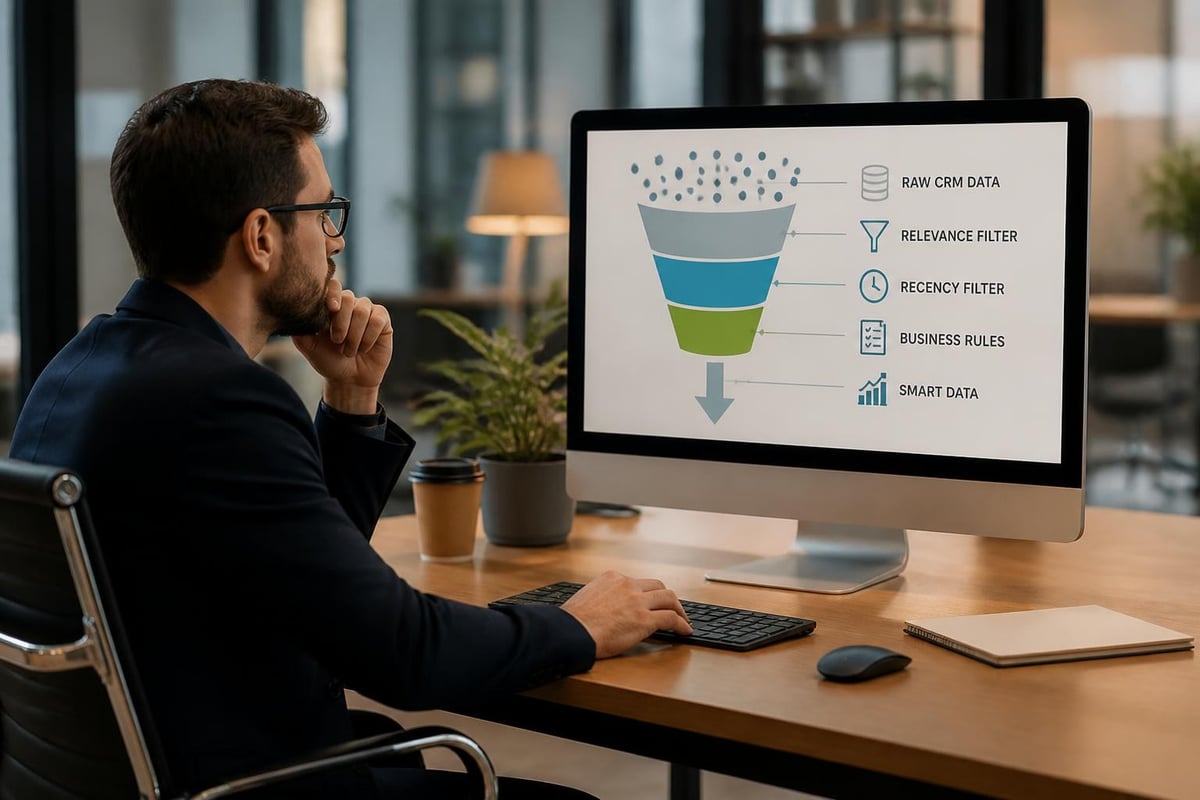
Smart data is not simply clean data or big data. It represents information that has been filtered, enriched, and structured specifically to answer business questions and drive automated decisions.
The core characteristics of smart data include:
Relevance to specific business objectives
Contextual enrichment beyond raw fields
Actionability through proper structure and accessibility
Timeliness for real-time or near-real-time decision-making
Accuracy validated through governance processes
Traditional data collection focuses on volume: capturing every interaction, storing every field, logging every click. Smart data takes the opposite approach, prioritizing signal over noise. In a CRM context, this means distinguishing between a contact who downloaded a whitepaper two years ago and never engaged again versus a contact who has progressively consumed content, engaged with sales emails, and matches your ideal customer profile.
Research from data-centric AI frameworks demonstrates that the quality and relevance of training data matters more than quantity for machine learning applications. The same principle applies to business intelligence: carefully curated datasets that connect customer attributes, behavioral patterns, and revenue outcomes will outperform massive databases of unstructured information.
The Smart Data Lifecycle
Creating smart data is not a one-time cleansing project. It requires an ongoing lifecycle that begins at data capture and continues through analysis and action.
Phase 1: Intentional Collection
Smart data starts with deliberate decisions about what to capture. Every property, every custom field, every tracking event should serve a defined purpose. When implementing HubSpot, this means building your data model around business processes rather than trying to track everything possible. For example, capturing deal stage timestamps enables cycle time analysis; logging specific objections allows pattern recognition for sales enablement.
Phase 2: Enrichment and Contextualization
Raw data becomes smart when you add context. A company name becomes valuable when enriched with industry classification, employee count, technology stack, and growth signals. A website visit becomes actionable when connected to previous interactions, campaign attribution, and buying stage indicators. HubSpot integrations can pull third-party enrichment data, sync behavioral signals from other platforms, and connect disparate data sources into unified customer records.
Phase 3: Validation and Governance
Smart data requires ongoing quality assurance. Governance frameworks for smart data emphasize the importance of establishing clear ownership, validation rules, and privacy controls. In practice, this means implementing workflows that flag incomplete records, enforce data standards, and regularly audit for accuracy.
Phase 4: Activation and Learning
The final phase transforms validated data into action through automation, reporting, and predictive modeling. Smart data should trigger workflows, populate dashboards, and inform AI systems. Equally important, the outcomes of those actions feed back into the data model, creating a continuous improvement loop.
Building Smart Data Architecture in HubSpot
HubSpot's flexibility allows businesses to build sophisticated data architectures, but that same flexibility can lead to chaotic data structures if not properly designed from the start.
Property Strategy and Data Model Design
Your property structure determines how easily you can extract insights later. Smart data architecture follows several key principles:
Design Principle | Implementation | Business Impact |
|---|---|---|
Single source of truth | One authoritative field per data point | Eliminates conflicting reports |
Calculated properties | Use HubSpot's calculated fields for derived metrics | Ensures consistency across teams |
Standardized taxonomies | Dropdown values instead of free text | Enables accurate segmentation |
Temporal tracking | Capture "date became X" properties | Supports lifecycle analysis |
Consider a B2B company tracking lead quality. Instead of a single "lead score" field that gets manually updated, smart data architecture would include automated scoring based on firmographic fit (company size, industry, location), behavioral engagement (content downloads, email opens, demo requests), and temporal factors (recency of activity, progression velocity). Each component feeds into a master score that updates in real-time and triggers appropriate workflows.
The challenge most businesses face is inheriting poorly structured CRM data or building properties reactively as needs arise. Clean data practices become essential when transforming existing databases into smart data assets that actually serve business intelligence needs.
Segmentation and List Logic
Smart data enables precise segmentation that goes beyond basic demographic filters. Advanced list building combines multiple data dimensions to identify specific audience cohorts.
Example: High-Intent Prospect Identification
A traditional approach might segment by "opened last email." A smart data approach builds a multi-dimensional profile:
Firmographic fit score above 70 (company matches ICP)
Behavioral engagement in last 30 days (3+ meaningful touches)
Content progression (moved from awareness to consideration topics)
Buying committee expansion (multiple contacts from same company engaging)
Technology signals (uses complementary tools, recent funding, hiring indicators)
This level of segmentation requires enriched, contextualized data that connects across objects and incorporates external signals. The resulting segment represents genuinely high-intent prospects rather than anyone who happened to click something recently.

Smart Data for AI and Automation
The rise of AI tools in CRM platforms creates new opportunities and new requirements for data quality. AI systems are only as intelligent as the data they consume.
Training Data Quality for Predictive Models
HubSpot's AI features, including Breeze agents and predictive lead scoring, rely on historical data patterns to make recommendations. Frameworks for smart data portfolios in AI governance highlight the importance of curating training datasets that accurately represent desired outcomes while avoiding bias and noise.
In practical terms, if you want AI to predict which deals will close, your historical deal data must accurately capture:
Legitimate closed-won and closed-lost outcomes (not deals marked lost due to data cleanup)
Complete interaction histories (not sparse records from partial adoption periods)
Consistent deal stages and properties (not fields that changed definition halfway through the year)
Representative sample periods (not just Q4 data when buying patterns differ)
Many businesses discover their CRM data is insufficient for AI applications only after attempting to implement predictive features. Building smart data from the beginning means designing your data capture and validation processes with future AI applications in mind, even before you activate those features.
Automation Triggers and Workflow Logic
Smart data enables sophisticated automation that responds to meaningful business events rather than simple field changes. The distinction matters enormously for workflow effectiveness.
Basic trigger: Contact fills out any form
Smart data trigger: Contact downloads third piece of content in consideration stage, previous content was pricing-related, contact is from target account segment, and no sales activity in last 15 days
The second trigger incorporates context, history, qualification, and timing. It fires far less frequently but with dramatically higher relevance, ensuring sales teams receive alerts only when genuine buying signals emerge.
Building these intelligent triggers requires properly structured data across objects. You need lifecycle stage progression timestamps, content topic classification, account-level segmentation properties, and activity logging that distinguishes meaningful engagement from noise.
Governance and Privacy Considerations
As data becomes smarter-more connected, more enriched, more predictive-governance becomes more critical. Organizations must balance the value of comprehensive data profiles against privacy obligations and ethical use.
Regulatory Compliance and Data Rights
Smart data strategies must account for GDPR, CCPA, and emerging privacy regulations that give individuals control over their information. Research on smart data governance in the AI era emphasizes that organizations need explicit policies covering data collection scope, retention periods, processing purposes, and individual rights.
Practical governance checklist for smart data:
Document legitimate business purpose for each data point collected
Implement consent management for tracking and enrichment activities
Build data deletion workflows that cascade across integrated systems
Audit third-party enrichment sources for compliance standards
Create transparency in how data informs automated decisions
In HubSpot specifically, this means configuring cookie policies, building GDPR-compliant forms, using subscription types appropriately, and ensuring that integrations respect consent preferences across platforms.
Data Quality as Operational Discipline
Governance also encompasses data quality management. Smart data degrades without ongoing maintenance. Contact information becomes outdated, companies change names or get acquired, job titles and roles shift, engagement scores become stale.
Establishing operational discipline requires:
Automated validation rules that prevent bad data entry at source
Regular enrichment cycles that refresh third-party data on defined schedules
Decay scoring that downgrades old information and flags records for review
Deduplication processes that merge records systematically rather than manually
Accountability structures that assign data stewardship responsibilities
When working with HubSpot Retainer Support, organizations can offload the ongoing maintenance required to keep data smart rather than letting it deteriorate into liability.
Reporting and Revenue Intelligence
The ultimate purpose of smart data is enabling better decisions. In revenue operations, this translates to reporting that actually explains performance rather than just documenting it.
From Descriptive to Predictive Analytics
Most CRM reports are descriptive: they show what happened. Smart data enables predictive analytics that forecast what will happen and prescriptive insights that recommend what to do.
Report Type | Example Question | Data Requirements |
|---|---|---|
Descriptive | How many deals closed last quarter? | Basic deal records with close dates |
Diagnostic | Why did conversion rates drop in March? | Stage progression, loss reasons, comparative periods |
Predictive | Which current opportunities will close this quarter? | Historical patterns, deal velocity, engagement signals |
Prescriptive | What should sales reps prioritize this week? | Deal scoring, capacity data, expected value calculations |
Moving up this analytics maturity curve requires progressively smarter data. Predictive and prescriptive analytics need enriched datasets that capture not just outcomes but the factors that drive those outcomes.
Building Revenue Attribution Models
Smart data architecture enables sophisticated attribution that connects revenue to specific marketing activities, sales actions, and customer touchpoints. Basic attribution might credit the last form submission before a deal. Multi-touch attribution using smart data considers:
First touch (original source tracking with UTM preservation)
Content journey (progression through awareness, consideration, decision content)
Campaign influence (all campaigns that touched the opportunity)
Sales activities (calls, emails, meetings at each deal stage)
Temporal weighting (recent touches valued higher than old touches)
Implementing this level of attribution requires careful data capture from day one. You cannot retroactively build attribution models on incomplete historical data. Revenue reporting systems built on smart data principles track attribution signals throughout the customer journey, not just at conversion points.

Practical Implementation Strategies
Transforming your CRM data into smart data is not an overnight project. It requires systematic planning, phased execution, and ongoing refinement.
Audit Your Current Data State
Before improving data quality, understand your baseline. Conduct a comprehensive audit that examines:
Completeness: What percentage of records have required fields populated?
Accuracy: How many records contain outdated or incorrect information?
Consistency: Are dropdown values used correctly? Do related records align?
Duplication: How many duplicate records exist across objects?
Utility: Which properties actually get used in reports, workflows, or segmentation?
This audit often reveals that businesses capture far more data than they use while missing critical data points for key analyses. The goal is not perfection across all fields but excellence in data that drives decisions.
Define Your Smart Data Strategy
Based on your audit and business objectives, define which data elements need to be "smart" (highly curated, enriched, validated) versus which can remain basic record-keeping.
Strategic prioritization framework:
Tier 1 - Critical Intelligence: Data that directly drives revenue decisions, automation triggers, or AI models. Requires rigorous governance, frequent validation, and enrichment.
Tier 2 - Operational Data: Information needed for day-to-day processes and standard reporting. Requires basic validation and occasional cleanup.
Tier 3 - Historical Archive: Data maintained for compliance or historical reference but not actively used. Minimal ongoing maintenance.
This tiered approach focuses resources where they create maximum value rather than trying to perfect all data simultaneously.
Implement Incrementally
Start with one business process or use case. For example, if you want to improve sales pipeline forecasting, focus on smartening the data that influences forecast accuracy:
Deal stage timestamps and progression velocity
Engagement scoring based on buyer activity
Account-level fit and opportunity sizing
Historical win/loss patterns and conversion rates
Sales rep notes and next step commitments
Build the workflows, enrichment processes, and validation rules for this specific use case. Prove the value with improved forecast accuracy. Then expand to the next priority use case.
Leverage Professional Expertise When Needed
Many organizations underestimate the complexity of transforming messy CRM data into smart data assets. Data quality services from experienced HubSpot partners can accelerate this transformation by bringing proven frameworks, technical expertise, and objective assessment of what actually needs fixing versus what can wait.
Maintaining Smart Data Over Time
Smart data is not a destination but an ongoing practice. As your business evolves, your data model must evolve with it.
Continuous Improvement Cycles
Establish quarterly reviews that examine:
Data usage analytics: Which properties are actively used? Which are ignored?
Quality metrics: Are validation rules preventing bad data entry?
Enrichment effectiveness: Are third-party data sources providing value?
Reporting gaps: What questions can't you answer with current data?
Process changes: Have business workflows shifted in ways that require data model updates?
These reviews prevent the gradual deterioration that occurs when data governance becomes stagnant. They also ensure your data model keeps pace with business growth and changing market conditions.
Training and Change Management
Smart data requires smart users. Even the best-designed data architecture fails if team members don't understand how to use it or circumvent it with manual processes.
Effective training programs cover:
Why data quality matters to individual roles
How to enter data correctly at the source
How to leverage smart data features in daily workflows
What to do when encountering data quality issues
How data connects to compensation, metrics, and business outcomes
When AI and automation systems rely on data quality, everyone who touches the CRM becomes a data steward whether they realize it or not. Making that explicit through training creates accountability.
Smart data transforms CRM systems from digital filing cabinets into strategic intelligence platforms that drive revenue growth. By focusing on relevance, enrichment, governance, and continuous improvement, businesses can extract genuine insights from the information they already collect. Revio specializes in building HubSpot implementations on smart data foundations, with expertise in data modeling, AI integrations, and revenue operations that turn your CRM into a competitive advantage rather than an administrative burden.
One clear next move
Build the system your team needs to grow.
Tell us which tools you use, where work is breaking and what growth is asking the team to do next. We will show you the right platform, system design and level of ongoing support.
Choose the toolsConfirm the platforms and licenses your teams actually need.
Build the systemDesign the process, data, automation, integrations and reporting around the work.
Keep it growingDecide what Revio should manage after launch.