HubSpot
Partner Solutions: Building Profitable Partnerships
· 5 min read
Partner solutions represent a strategic approach to business growth that leverages collaborative relationships between technology providers, implementation specialists, and end customers. In an increasingly complex business environment, organizations recognize that no single company can deliver complete value alone. By building robust partner solutions frameworks, businesses create scalable revenue channels while delivering comprehensive customer experiences that drive measurable outcomes. The most successful companies invest in structured partner programs that combine enablement, technology integration, and ongoing support to maximize mutual success.
Understanding the Partner Solutions Framework
Modern partner solutions extend far beyond simple referral arrangements or reseller relationships. They encompass comprehensive ecosystems where strategic partners contribute specialized expertise, technical capabilities, and market access to deliver complete customer solutions. These frameworks require careful design to align incentives, establish clear communication channels, and create sustainable value for all stakeholders.
The foundation of effective partner solutions rests on three core pillars: enablement infrastructure, technology integration, and performance measurement. Organizations that excel in these areas build partnerships that scale efficiently while maintaining service quality and customer satisfaction.
Defining Partnership Archetypes
Different partner types require distinct support models and engagement strategies. Implementation partners focus on deployment services, technology partners provide platform integrations, and referral partners generate qualified leads. Designing flexible partner programs that accommodate these archetypes ensures each relationship receives appropriate resources and recognition.
Key partner categories include:
Implementation specialists who deploy and configure solutions
Technology integrators who connect platforms and data systems
Managed service providers offering ongoing support
Referral partners generating qualified opportunities
Strategic advisors providing consulting expertise
Understanding these distinctions allows businesses to create targeted partner enablement programs that address specific needs, skill gaps, and revenue potential for each partnership type.

Building Effective Partner Onboarding Programs
Structured onboarding determines whether partner solutions generate quick wins or stall during implementation. Partner onboarding best practices emphasize systematic knowledge transfer, clear certification paths, and accelerated time-to-first-deal metrics that validate program effectiveness.
Successful onboarding programs typically span 60-90 days and cover four essential components: product knowledge, sales methodology, technical capabilities, and customer success protocols. Organizations that compress this timeline without sacrificing comprehension achieve faster partner productivity and higher retention rates.
Structuring the Onboarding Journey
The first 30 days should focus exclusively on foundational knowledge. Partners need deep understanding of product capabilities, ideal customer profiles, competitive positioning, and value proposition messaging. This phase establishes the baseline competency required for credible customer conversations.
Days 31-60 shift toward practical application through shadowing opportunities, role-playing exercises, and supported pilot projects. Partners begin engaging real prospects while receiving coaching and feedback from experienced team members who can identify gaps and reinforce best practices.
The final 30 days emphasize independent execution with safety nets. Partners handle full sales cycles or implementation projects while maintaining access to escalation resources and technical specialists. This graduated approach builds confidence while protecting customer experience quality.
Onboarding Phase | Duration | Primary Focus | Success Metrics |
|---|---|---|---|
Foundation | Days 1-30 | Product knowledge, positioning | Certification completion |
Application | Days 31-60 | Shadowing, practice projects | First qualified opportunity |
Independence | Days 61-90 | Full cycle ownership | First closed deal |
Technology Integration for Partner Solutions
Modern partner solutions demand seamless technology connectivity between partner systems, primary platforms, and customer environments. Integration capabilities determine whether partnerships scale efficiently or become administrative bottlenecks that frustrate all parties.
CRM platforms serve as the central hub for partner data, opportunity tracking, and performance analytics. Organizations using HubSpot gain advantages through native partner management features, deal registration workflows, and custom reporting dashboards that surface partner contribution metrics. Custom integrations extend these capabilities by connecting specialized tools, bidirectional data syncs, and automated workflows that reduce manual coordination overhead.
Critical Integration Points
Partner portals require real-time access to resources, training materials, deal status updates, and commission information. Implementing partner portal best practices ensures these platforms deliver personalized experiences based on partner tier, certification level, and geographic region.
Essential portal capabilities include:
Single sign-on authentication for frictionless access
Role-based content filtering for relevant resources
Deal registration systems preventing channel conflict
Real-time performance dashboards tracking quota attainment
Integrated learning management for ongoing education
Mobile-responsive design for field access
For businesses managing complex partner ecosystems, custom HubSpot integrations connect disparate systems while maintaining data accuracy across platforms. These integrations handle scenarios like bidirectional opportunity syncs, automated lead routing based on partner specialization, and consolidated reporting that attributes revenue correctly across multiple partner touchpoints.

Enabling Partner Success Through Knowledge Management
Partner solutions succeed or fail based on knowledge accessibility. Partners juggling multiple vendor relationships cannot afford to search extensively for answers or wait hours for support responses. Implementing partner knowledge basesthat anticipate common questions, provide contextual guidance, and update continuously creates self-sufficient partners who close deals faster.
Knowledge management extends beyond static documentation. Leading organizations build comprehensive resource libraries that include video tutorials, implementation playbooks, objection handling scripts, customer success stories, and technical specification sheets. This content must remain current, searchable, and organized by partner journey stage.
Structuring Knowledge for Different Partner Roles
Technical partners need architecture diagrams, API documentation, integration guides, and troubleshooting resources. Sales-focused partners require battlecards, ROI calculators, proposal templates, and competitive differentiation materials. Service partners benefit from project management frameworks, customer handoff procedures, and escalation protocols.
Organizations that segment knowledge by role and certification level prevent information overload while ensuring partners access appropriate content. A newly certified partner should not navigate the same resource library as a five-year strategic partner managing enterprise deployments.
Partner Role | Primary Resources | Update Frequency |
|---|---|---|
Sales Partners | Battlecards, proposals, ROI tools | Monthly |
Technical Partners | API docs, architecture guides | Per release |
Service Partners | Playbooks, handoff procedures | Quarterly |
Strategic Advisors | Market research, roadmap updates | As available |
Regular content audits identify outdated materials, missing resources, and opportunities to transform common support questions into self-service assets. This continuous improvement cycle reduces dependency on internal teams while improving partner confidence.
Measuring Partner Solutions Performance
What gets measured gets managed. Comprehensive partner solutions programs establish clear metrics that track partner health, revenue contribution, and program ROI. These measurements inform investment decisions, identify struggling partnerships requiring intervention, and recognize high performers deserving additional support.
Leading indicators like partner engagement scores, certification completion rates, and pipeline generation velocity predict future revenue before it materializes. Lagging indicators including closed revenue, customer retention rates, and partner satisfaction scores validate whether current strategies deliver intended outcomes.
Building Partner Scorecards
Effective scorecards balance quantitative metrics with qualitative assessments. Revenue numbers matter, but partner scorecards should also evaluate relationship health, strategic alignment, and growth trajectory. Treating partners as extensions of marketing and sales teams means measuring their contribution through similar frameworks while accounting for partnership-specific factors.
Critical partner metrics include:
Monthly recurring revenue generated
Average deal size compared to direct sales
Sales cycle length from opportunity to close
Customer lifetime value for partner-sourced accounts
Net promoter score from partner surveys
Certification and training completion rates
Portal engagement and resource utilization
Support ticket volume and resolution time
Organizations that share these metrics transparently with partners create accountability while demonstrating commitment to mutual success. Quarterly business reviews using data-driven insights strengthen relationships and identify expansion opportunities.
Designing Compensation and Incentive Structures
Partner solutions require thoughtful compensation models that balance profitability, motivation, and sustainability. Commission structures, referral fees, revenue sharing arrangements, and performance bonuses must align with desired partner behaviors while maintaining economic viability for all parties.
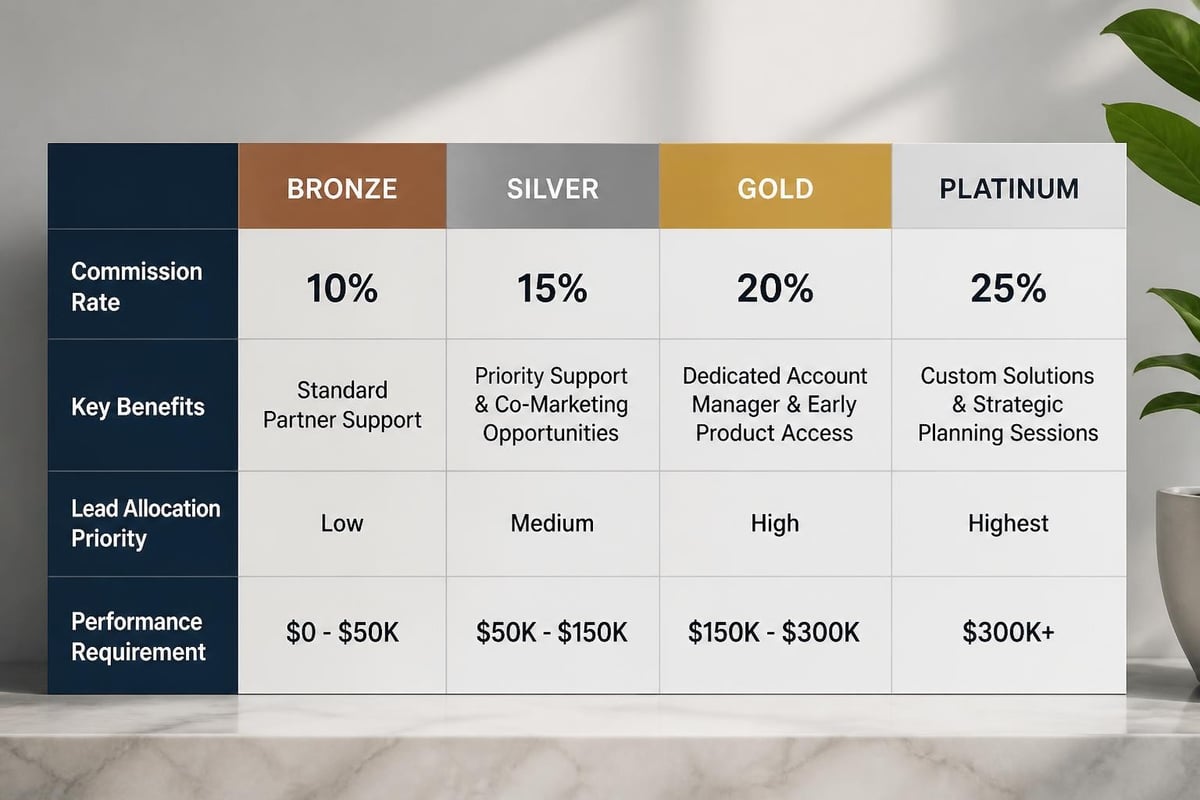
Tiered programs that reward performance with higher commission rates, additional benefits, and preferential lead access create natural progression paths. Partners understand exactly what behaviors generate greater rewards, creating healthy competition that elevates overall ecosystem performance.
Addressing Complex Compensation Scenarios
Multi-touch attributions, channel conflict situations, and partnership overlaps demand clear rules documented before disputes arise. Organizations that establish transparent deal registration systems, defined territory assignments, and documented escalation procedures prevent conflicts that damage partner relationships and delay customer solutions.
Compensation timing matters as much as amount. Partners operating on tight cash flows benefit from accelerated commission payments that improve working capital. While delayed payments protect against customer churn risk, they strain partner finances and reduce program attractiveness compared to competitors offering faster payouts.
Maintaining Partner Relationships Through Ongoing Engagement
Initial onboarding represents just the beginning of successful partner solutions. Sustained engagement through regular communication, continuous education, and proactive support determines long-term partnership value. Strategies to enhance channel partner engagement emphasize personalized touchpoints, recognition programs, and collaborative planning sessions that reinforce strategic alignment.
Quarterly business reviews provide structured opportunities to assess performance, discuss challenges, align on upcoming initiatives, and strengthen personal relationships beyond transactional interactions. These meetings should balance accountability with support, celebrating wins while addressing performance gaps constructively.
Creating Partner Communities
Top-performing partner programs build communities where partners network, share best practices, and learn from collective experience. Annual partner conferences, regional user groups, online forums, and certification cohorts create belonging while reducing isolation for partners representing the solution in their markets.
These communities generate valuable feedback that informs product development, identifies market trends, and surfaces innovative use cases that benefit the entire ecosystem. Partners who feel heard and valued contribute more actively, advocate more enthusiastically, and remain loyal despite competitive recruitment efforts.
Community engagement tactics include:
Monthly virtual roundtables discussing industry trends
Private Slack or Teams channels for real-time collaboration
Annual awards recognizing exceptional partner achievements
Regional meetups combining education with networking
Co-marketing opportunities amplifying partner visibility
Investment in community building pays dividends through improved retention, increased partner satisfaction, and accelerated knowledge sharing that elevates overall ecosystem capability.
Optimizing Partner Solutions for Scale
Growing partner ecosystems require operational discipline that maintains quality while increasing volume. Manual processes that work with ten partners collapse under the weight of fifty or one hundred. Automation, standardization, and technology leverage become essential for sustainable scaling.
Workflow automation handles routine tasks like partner application processing, certification tracking, commission calculations, and performance reporting. This automation frees internal teams to focus on strategic partner development, complex problem-solving, and relationship building that cannot be systematized.
Segmenting Partners for Efficient Management
Not all partners deserve equal attention. Strategic partners generating significant revenue or possessing unique capabilities warrant dedicated account management and customized support. Transactional partners operating at lower volumes receive standardized resources through self-service channels.
This segmentation prevents resource misallocation while ensuring high-value partnerships receive appropriate investment. Clear criteria for tier placement, transparent promotion requirements, and documented benefits maintain fairness while optimizing team efficiency.
Partner Tier | Annual Revenue | Account Manager | Quarterly Reviews | Custom Support |
|---|---|---|---|---|
Strategic | $500K+ | Dedicated | Yes | 24/7 access |
Growth | $100K-$500K | Shared | Biannual | Business hours |
Developing | $25K-$100K | Pool | Annual | Self-service |
Emerging | <$25K | Automated | As needed | Documentation |
Integrating Partner Solutions with Revenue Operations
Partner-generated revenue must integrate seamlessly with direct sales, marketing attribution, and customer success workflows. Building robust reporting systems that accurately track partner contribution across the customer lifecycle prevents data silos and enables comprehensive revenue analysis.
Revenue operations teams ensure partner data flows correctly into CRM systems, attribution models account for assisted conversions, and forecasting incorporates partner pipeline with appropriate probability weighting. This integration provides leadership with complete visibility into all revenue sources and their performance trajectories.
Partner solutions also require coordination with existing sales territories to prevent channel conflict. Clear rules governing lead ownership, account assignment, and competitive situations protect relationships while maximizing total revenue. When direct sales teams and partners collaborate instead of compete, customers receive superior experiences and conversion rates improve.
Aligning Partner Solutions with Customer Success
The partner relationship does not end at contract signature. Service delivery quality, customer onboarding effectiveness, and ongoing support determine whether partner-sourced customers achieve desired outcomes and renew subscriptions. Organizations must establish clear handoff procedures, maintain visibility into partner-managed implementations, and intervene when customer health scores indicate risk.
Joint success planning sessions between internal customer success teams and partner service delivery managers align on customer goals, track milestone achievement, and coordinate expansion opportunities. This collaboration ensures consistent customer experience regardless of acquisition channel while leveraging partner expertise for specialized implementation requirements.
Adapting Partner Solutions Post-Merger or Acquisition
Corporate development activities create unique challenges for existing partner ecosystems. Managing partner programs after mergers or acquisitions requires careful integration planning that preserves successful partnerships while eliminating redundancy and conflict.
Due diligence must assess both organizations' partner programs, identify overlapping relationships, evaluate program economics, and determine the optimal combined structure. Partners value stability and clear communication during transitions that otherwise create uncertainty about their future role and compensation.
Integration priorities include:
Mapping overlapping partner relationships and territories
Harmonizing compensation structures and tier requirements
Consolidating technology platforms and portal access
Unifying training and certification programs
Communicating transition plans transparently
Retaining key partner relationships through dedicated outreach
Organizations that manage these transitions thoughtfully retain valuable partnerships while achieving desired synergies. Rushed integrations that ignore partner concerns risk losing productive relationships that took years to develop.
Leveraging Artificial Intelligence in Partner Solutions
AI capabilities transform partner solutions through intelligent lead routing, automated resource recommendations, predictive churn analysis, and personalized partner communications. Organizations implementing AI and data solutions within partner programs achieve higher efficiency and better outcomes than those relying exclusively on manual processes.
Intelligent systems analyze partner performance data to predict which partners will succeed with specific opportunity types, automatically routing leads to partners with the highest probability of closing. This optimization improves conversion rates while ensuring fair lead distribution based on demonstrated capability rather than arbitrary rules.
Chatbots and virtual assistants provide 24/7 partner support for common questions, freeing human support teams for complex issues requiring judgment and expertise. Natural language processing extracts insights from partner feedback, support tickets, and training evaluations to identify program improvement opportunities.
Partner solutions deliver sustainable competitive advantage when built on structured enablement, seamless technology integration, and data-driven optimization. Organizations that invest in comprehensive partner programs create scalable revenue channels while delivering superior customer experiences through specialized expertise and expanded market reach. Revio helps businesses implement the CRM infrastructure, automation workflows, and reporting systems that power high-performing partner ecosystems, ensuring every partnership contributes measurable value to your revenue goals.
One clear next move
Build the system your team needs to grow.
Tell us which tools you use, where work is breaking and what growth is asking the team to do next. We will show you the right platform, system design and level of ongoing support.
Choose the toolsConfirm the platforms and licenses your teams actually need.
Build the systemDesign the process, data, automation, integrations and reporting around the work.
Keep it growingDecide what Revio should manage after launch.