Fresh thinking for
growing businesses.
Ideas, practical guides and lessons from building brands, connecting systems and putting AI to work.
AI
AI Automation Services: Transform Your Business Workflow
· 6 min read
Business leaders today face mounting pressure to deliver more with less. Teams stretched thin, data scattered across platforms, and manual processes consuming hours that could be spent on strategic work. AI automation services offer a practical solution to these challenges, enabling organizations to streamline operations, reduce human error, and focus resources on high-value activities. Unlike traditional automation that follows rigid rules, modern AI-powered solutions adapt to context, learn from patterns, and handle complex decision-making that previously required human intervention.
Understanding AI Automation Services
AI automation services combine artificial intelligence capabilities with business process automation to create intelligent systems that handle repetitive tasks, analyze data, and execute workflows with minimal human oversight. These services go beyond simple if-then logic by incorporating machine learning, natural language processing, and predictive analytics to make context-aware decisions.
The distinction between traditional automation and AI-powered automation lies in adaptability. Traditional automation executes predetermined steps without variation. AI automation services learn from data patterns, adjust to changing conditions, and improve performance over time. This makes them particularly valuable for processes involving unstructured data, customer interactions, or scenarios requiring judgment calls.
Core Components of Modern AI Automation
Machine Learning Models form the foundation, enabling systems to recognize patterns and make predictions based on historical data. These models power everything from lead scoring to anomaly detection in financial transactions.
Natural Language Processing allows systems to understand and generate human language, powering chatbots, email classification, and sentiment analysis. This capability has transformed customer service and internal communications.
Process Mining Tools analyze existing workflows to identify bottlenecks and optimization opportunities. They map how work actually flows through an organization versus how it should flow.
Integration Frameworks connect AI capabilities with existing business systems, ensuring data flows smoothly between platforms and automation triggers occur at the right moments.

Business Applications Driving ROI
Organizations implementing ai automation services typically focus on areas where repetitive tasks consume significant time or where speed and accuracy directly impact revenue. The applications delivering measurable returns span multiple departments and functions.
Revenue Operations and CRM Management
Sales and marketing teams benefit substantially from automated lead routing, qualification, and enrichment. AI analyzes incoming leads based on behavioral signals, firmographic data, and historical conversion patterns to assign scores and route prospects to the appropriate team members. This ensures high-value opportunities receive immediate attention while lower-priority leads enter nurture sequences automatically.
Data cleanup and deduplication represent another critical application. Research on AI-driven automation in professional services shows that organizations waste considerable resources managing poor data quality. AI automation services continuously monitor CRM data, identifying duplicates, standardizing formats, and flagging records requiring human review. For companies managing thousands of contacts across multiple touchpoints, this capability prevents the data decay that undermines reporting accuracy and sales effectiveness.
Pipeline automation eliminates manual status updates and follow-up tasks. When deals stall, AI-powered systems can trigger personalized outreach sequences, alert managers to at-risk opportunities, or suggest next actions based on what worked for similar deals. For teams focused on improving pipeline velocity, this removes friction from the sales process and ensures consistent execution.
Customer Service and Support
Intelligent Ticket Routing analyzes support requests using natural language processing to understand intent, urgency, and required expertise. Tickets automatically route to agents with relevant knowledge, reducing resolution time and improving first-contact resolution rates.
Automated Response Generation handles common inquiries without human intervention. AI systems access knowledge bases, transaction histories, and product documentation to provide accurate answers to routine questions, freeing support teams to focus on complex issues requiring empathy and creative problem-solving.
Sentiment Analysis monitors customer communications across channels to identify dissatisfaction early. When sentiment scores drop below thresholds, automation escalates cases to senior staff or triggers retention workflows before customers churn.
Application Area | Primary Benefit | Typical Time Savings |
|---|---|---|
Lead Qualification | Higher conversion rates | 60-70% reduction in manual review |
Data Cleanup | Improved reporting accuracy | 80-90% reduction in manual updates |
Ticket Routing | Faster resolution | 40-50% reduction in response time |
Report Generation | Better decision-making | 75-85% reduction in manual compilation |
Implementation Considerations
Successful deployment of ai automation services requires more than selecting the right technology. Organizations must address technical, organizational, and strategic factors that determine whether automation delivers promised benefits or becomes another underutilized tool.
Assessing Automation Readiness
Data Infrastructure forms the foundation. AI systems require clean, accessible data to function effectively. Organizations with data scattered across disconnected systems or stored in inconsistent formats face significant preparatory work before automation can begin. Evaluating data quality, governance policies, and integration capabilities should precede any automation initiative.
Process Documentation reveals what actually happens versus what should happen. Many organizations discover that undocumented workarounds and exceptions complicate automation efforts. Process mining tools can map existing workflows, but stakeholder interviews remain essential for understanding context and constraints.
Change Management Capacity determines whether teams will adopt new systems. According to PwC's analysis of AI's impact on professional services workforce, successful automation initiatives involve employees early, addressing concerns about job displacement and emphasizing augmentation over replacement. Organizations lacking change management experience often struggle with adoption regardless of technical implementation quality.
Selecting the Right Automation Approach
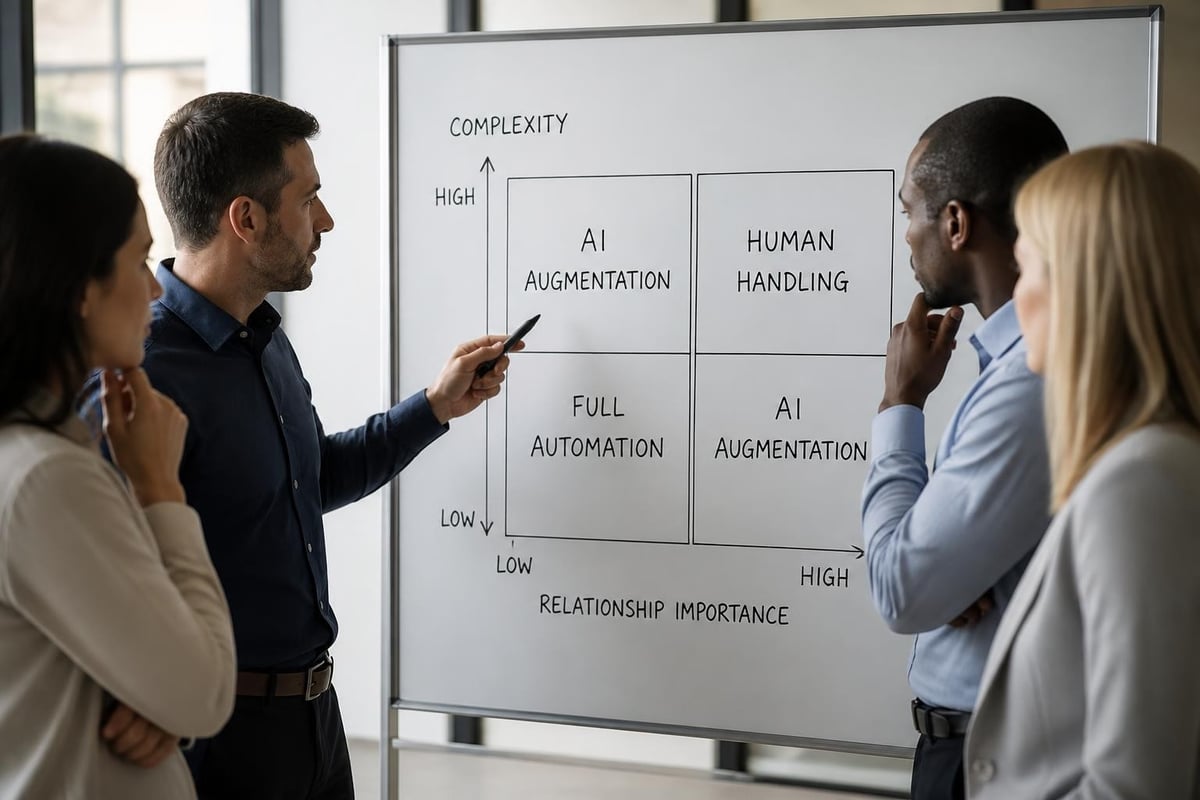
Not all processes benefit equally from AI automation services. Research examining which tasks workers want AI to automate reveals significant variation in suitability based on task characteristics, required judgment, and stakeholder preferences.
High-Volume, Repetitive Tasks with clear success criteria represent ideal candidates. Data entry, appointment scheduling, invoice processing, and similar activities consume time without requiring creative thinking or relationship management. Automation here produces immediate, measurable returns.
Data-Intensive Analysis that currently requires manual compilation from multiple sources benefits substantially from automation. Revenue reporting, customer segmentation, and performance dashboards can be generated automatically, ensuring decision-makers access current information without waiting for analysts to compile spreadsheets. Teams looking to build reports that drive better decisions find automation particularly valuable here.
Customer Interactions requiring personalization at scale see improvement from AI assistance rather than full automation. Chatbots handling initial inquiries, email systems suggesting personalized content, and recommendation engines presenting relevant products all augment human capabilities while maintaining the personal touch customers expect.
Technical Architecture and Integration
AI automation services function as part of broader technology ecosystems rather than standalone solutions. The architecture connecting AI capabilities with existing business systems determines whether automation feels seamless or creates new friction points.
Platform Selection and Vendor Evaluation
Organizations face choices between all-in-one platforms offering integrated automation capabilities and best-of-breed approaches combining specialized tools. All-in-one platforms like HubSpot, Salesforce, and Microsoft Dynamics provide native AI features alongside CRM, marketing automation, and service desk functionality. These platforms simplify integration but may limit flexibility for highly specialized needs.
Best-of-breed approaches select specialized tools for specific functions like document processing, conversational AI, or predictive analytics, then integrate them with core business systems. This maximizes capability in each area but increases integration complexity and vendor management overhead.
For companies implementing AI capabilities within HubSpot, native Breeze agents handle many common automation scenarios without requiring external tools. However, complex requirements around custom data transformations, advanced predictive modeling, or specialized industry workflows may necessitate third-party AI services integrated through APIs.
Integration Patterns and Data Flow
Real-Time Synchronization ensures automation triggers immediately when conditions are met. When a lead reaches a certain score, assigns to a sales rep, or exhibits buying signals, workflows execute without delay. This pattern works well for time-sensitive processes where minutes matter.
Batch Processing handles automation that doesn't require immediate execution. Nightly data cleanup routines, weekly report generation, and monthly performance analysis run during off-peak hours, conserving system resources while maintaining consistency.
Event-Driven Architecture monitors for specific triggers across systems. When events occur like form submissions, purchase completions, or support ticket status changes, automation workflows activate appropriate responses. This pattern supports complex, multi-system processes where actions in one platform should trigger responses in others.
Measuring Impact and Optimizing Performance
Deploying ai automation services represents an investment requiring justification through measurable outcomes. Organizations need frameworks for assessing performance, identifying optimization opportunities, and demonstrating return on investment to stakeholders.
Key Performance Indicators
Time Savings quantify hours previously spent on manual tasks now handled by automation
Error Reduction measures accuracy improvements in data entry, calculations, and process execution
**Velocity Metrics** track how quickly work moves through pipelines and workflows
Cost per Transaction evaluates operational efficiency gains from reduced manual processing
Employee Satisfaction gauges whether automation eliminates frustration and enables focus on meaningful work
The UiPath automation trends analysis emphasizes that leading organizations track both efficiency gains and strategic outcomes. Reduced processing time matters less if automation doesn't improve customer experience, accelerate revenue recognition, or free teams for higher-value activities.
Continuous Improvement Strategies
Performance Monitoring tracks automation execution success rates, processing times, and exception handling. When workflows fail or require human intervention, understanding patterns reveals opportunities for refinement.
A/B Testing compares automated approaches against manual processes or alternative automation strategies. Testing different lead scoring models, email personalization strategies, or routing algorithms identifies which approaches deliver superior results.
Feedback Loops incorporate user input from teams interacting with automated systems. Sales representatives, customer service agents, and operations staff often identify edge cases, missing scenarios, or improvement opportunities that data alone doesn't reveal.
Optimization Area | Monitoring Approach | Improvement Action |
|---|---|---|
Workflow Success Rate | Daily execution logs | Refine trigger conditions and exception handling |
Processing Speed | Transaction timestamps | Optimize queries and reduce API calls |
User Adoption | System usage analytics | Enhance training and simplify interfaces |
Accuracy | Quality audits | Retrain models with updated data |

Strategic Considerations for Enterprise Adoption
Large organizations implementing ai automation services at scale face challenges beyond technical implementation. KPMG's research on scaling enterprise AI with managed services identifies governance, change management, and technical debt as primary obstacles to successful enterprise automation programs.
Governance and Compliance
Data Privacy Requirements govern how AI systems access, process, and store customer information. Automation involving personally identifiable information must comply with regulations like GDPR, CCPA, and industry-specific requirements. Organizations need clear policies defining what data automation can access and how long it's retained.
Audit Trails document automation decisions for regulatory compliance and troubleshooting. When AI systems make decisions affecting customers, employees, or financial transactions, maintaining records of inputs, logic applied, and outcomes becomes essential for compliance and accountability.
Ethical Guidelines address bias, fairness, and transparency concerns. AI models trained on historical data may perpetuate existing biases in hiring, lending, or customer service decisions. Regular audits and diverse training data help mitigate these risks.
Building Internal Capabilities
Organizations face build-versus-buy decisions around ai automation services. Building internal teams provides maximum control and customization but requires substantial investment in talent acquisition, training, and retention. Buying services from specialized providers accelerates deployment but may limit flexibility for highly specialized needs.
Hybrid Approaches combine internal strategy and governance with external execution expertise. Organizations define automation priorities and success criteria while partnering with specialists who handle technical implementation. For companies implementing CRM systems with AI capabilities, working with partners experienced in both the platform and automation best practices accelerates time to value while building internal knowledge.
Training Programs ensure teams can maintain and optimize automation after initial deployment. Without ongoing skill development, organizations become dependent on vendors for minor adjustments and miss optimization opportunities requiring platform expertise.
Industry-Specific Applications
Different sectors face unique automation opportunities based on their workflows, regulatory environments, and customer expectations. Understanding industry-specific applications helps organizations identify relevant use cases and learn from similar organizations.
Professional Services
Law firms, accounting practices, and consulting organizations use ai automation services for document review, contract analysis, and research synthesis. Thomson Reuters' analysis of AI in professional services shows that generative AI particularly impacts knowledge work previously considered too complex for automation.
Time tracking and billing automation captures billable hours from calendar entries, email analysis, and document creation timestamps. This reduces administrative burden while improving billing accuracy and reducing revenue leakage from unbilled time.
Financial Services
Banks and investment firms deploy automation for fraud detection, credit risk assessment, and regulatory reporting. AI systems analyze transaction patterns to identify anomalies indicating fraudulent activity, often catching issues human reviewers would miss due to volume and subtlety.
Customer onboarding automation verifies identities, assesses risk profiles, and routes applications through approval workflows. What previously required days of manual review now completes in hours, improving customer experience while maintaining compliance standards.
Healthcare and Life Sciences
Patient scheduling automation optimizes appointment calendars based on provider availability, procedure duration, and patient preferences. AI systems predict no-show likelihood and automatically overbook or send reminders accordingly.
Claims processing automation extracts information from medical records, verifies coverage, and routes claims through approval workflows. This accelerates reimbursement while reducing errors that lead to claim denials and rework.
Future Trajectories in AI Automation
The ai automation services landscape continues evolving as capabilities expand and adoption patterns mature. Organizations planning long-term automation strategies should consider emerging trends shaping the next generation of intelligent automation.
Multi-Agent Systems
Rather than monolithic automation platforms, organizations increasingly deploy specialized AI agents handling specific functions. One agent might qualify leads, another enriches contact data, and a third generates personalized content. These agents coordinate through shared data and event triggers, creating flexible automation ecosystems that adapt as requirements change.
Governance-as-Code
Automation policies and compliance rules increasingly get encoded directly into systems rather than documented in separate policy documents. This ensures consistent enforcement, simplifies auditing, and reduces the risk of automation behavior drifting from intended governance standards.
Outcome-Based Engagement Models
KPMG's managed services outlook notes a shift from traditional time-and-materials contracts toward outcome-focused agreements where automation providers share risk and reward based on measurable business results. This alignment incentivizes optimization and ensures automation delivers strategic value rather than just technical implementation.
AI automation services transform how organizations operate by eliminating manual tasks, improving accuracy, and enabling teams to focus on strategic work that drives revenue growth. The key to success lies in thoughtful implementation that addresses technical requirements, organizational readiness, and strategic alignment simultaneously. Revio helps businesses implement AI-powered automation within HubSpot, building intelligent workflows that connect sales, marketing, and service operations while maintaining clean data and delivering actionable insights that drive better decisions.
Put good ideas to work in your business.
We build practical AI systems around your customers, your team and the work that helps your business grow.