Fresh thinking for
growing businesses.
Ideas, practical guides and lessons from building brands, connecting systems and putting AI to work.
AI
AI Smart: How Intelligent Automation Transforms Business
· 5 min read
The convergence of artificial intelligence with business systems has created what industry leaders now call "ai smart" technology-intelligent automation that doesn't just execute tasks but learns, adapts, and optimizes business processes in real time. For organizations managing customer relationships, revenue operations, and data-intensive workflows, the shift toward ai smart solutions represents more than incremental improvement. It's a fundamental transformation in how teams work, how systems communicate, and how businesses scale their operations without proportionally scaling headcount. This evolution matters particularly for companies leveraging platforms like HubSpot, where ai smart capabilities can turn a CRM into a revenue acceleration engine.
Understanding AI Smart Technology in Modern Business
The term "ai smart" encompasses more than basic automation or rule-based workflows. It describes systems that incorporate machine learning, natural language processing, and predictive analytics to make autonomous decisions within defined parameters.
What Distinguishes AI Smart from Traditional Automation
Traditional automation follows rigid if-then logic. If a lead submits a form, then send an email. If a deal reaches a certain stage, then notify the sales manager. These workflows execute predictably but lack contextual awareness.
AI smart systems operate differently by:
Analyzing patterns across thousands of data points to identify trends humans might miss
Adjusting behavior based on outcomes rather than following static rules
Processing unstructured data like emails, call transcripts, and chat logs to extract actionable insights
Predicting future behaviors and outcomes with increasing accuracy over time
Research into neuro-symbolic approaches for AI reliability demonstrates how combining symbolic reasoning with deep learning creates more trustworthy intelligent systems. This hybrid approach addresses one of the fundamental challenges with pure machine learning: the "black box" problem where systems produce results without explainable logic.

The Role of Data Quality in AI Smart Success
Every ai smart implementation lives or dies based on data quality. Machine learning models trained on incomplete, duplicate, or inaccurate records will produce flawed insights and unreliable predictions.
Data Quality Issue | Impact on AI Performance | Mitigation Strategy |
|---|---|---|
Duplicate records | Skewed pattern recognition, incorrect prioritization | Regular deduplication, merge rules, validation workflows |
Incomplete properties | Missing context for decision-making | Required fields, progressive profiling, enrichment integrations |
Inconsistent formatting | Failed matching, broken segmentation | Standardization rules, dropdown menus, input validation |
Outdated information | Irrelevant predictions, wasted outreach | Decay rules, regular cleanup schedules, data refresh protocols |
For businesses considering ai smart implementations within their CRM, understanding how to structure data for effective AI deployment becomes critical infrastructure work before activating intelligent features.
AI Smart Applications in Revenue Operations
Revenue operations teams face an impossible task: maintain perfect data hygiene, ensure seamless handoffs between departments, provide real-time visibility into pipeline health, and continuously optimize conversion rates. AI smart technology addresses these challenges through specialized applications.
Intelligent Lead Routing and Scoring
Manual lead assignment wastes time and creates inconsistency. Sales reps receive leads outside their territory, or high-value prospects wait hours for assignment while lower-priority contacts get immediate attention.
AI smart routing analyzes multiple signals simultaneously:
Firmographic data including company size, industry, location, and technology stack
Behavioral signals such as content consumed, email engagement, and website activity patterns
Historical performance showing which rep types close which customer profiles most effectively
Current workload balancing opportunity distribution across the team
Predictive scoring identifying which leads statistically convert at higher rates
The system doesn't just assign leads faster. It assigns them better, learning from every closed-won and closed-lost deal to refine its matching algorithm continuously.
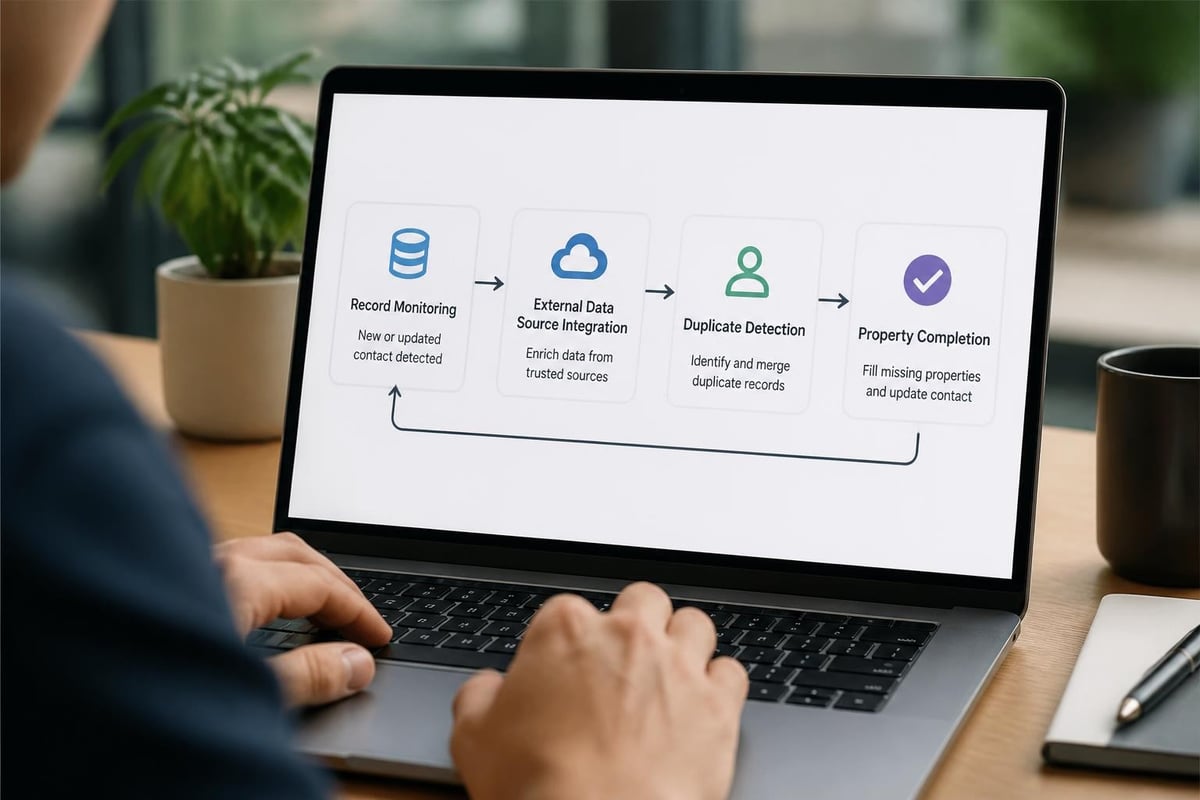
Automated Data Enrichment and Maintenance
Every CRM degrades over time. Contacts change jobs, companies get acquired, phone numbers disconnect, and email addresses bounce. Maintaining accurate records manually requires dedicated resources most businesses don't have.
AI smart enrichment solutions:
Monitor contact records for decay indicators and trigger automatic updates
Pull fresh firmographic data from trusted sources when records show staleness signals
Identify and merge duplicate records based on fuzzy matching algorithms
Fill missing property values by analyzing similar records and external databases
Flag anomalies that require human review rather than automated correction
Research on AI integration with sensor networks and data systems provides insights into how distributed intelligence can maintain data integrity across complex technical infrastructures-principles that apply equally to CRM ecosystems.
Predictive Pipeline Analytics
Most pipeline reports tell you what happened last quarter. AI smart analytics tell you what will happen next quarter with quantifiable confidence levels.
These systems analyze historical deal progression to identify patterns:
Which deal characteristics correlate with faster close times
At which stages deals most commonly stall or fall out of pipeline
How specific activities (calls, demos, proposals) impact win probability
Which combination of buyer personas and product configurations convert best
What external factors (seasonality, market conditions, competitive presence) influence outcomes
The practical application transforms pipeline reporting from backward-looking summaries into forward-looking strategic tools. Sales leaders can identify at-risk deals before they stall, forecast revenue with greater accuracy, and allocate resources toward opportunities with the highest probability of closing.
Implementing AI Smart Features in HubSpot
HubSpot's recent introduction of Breeze AI represents a significant advancement in making ai smart capabilities accessible to businesses without requiring custom development or data science expertise.
Native AI Capabilities Worth Activating
Modern CRM platforms now include ai smart features that many users never activate because they don't realize the capabilities exist or understand the business value.
Content generation and optimization uses natural language processing to draft emails, blog posts, and social media updates based on your brand voice and historical high-performing content. The ai smart system learns which messaging resonates with different audience segments and suggests variations for testing.
Conversation intelligence transcribes sales calls and video meetings, identifies key moments (pricing discussions, objections, competitor mentions), and surfaces coaching opportunities by comparing rep performance against top performers. Teams using this capability consistently report shortened ramp times for new hires and improved win rates across the organization.
Predictive lead scoring moves beyond manual point assignment to machine learning models that calculate conversion probability based on hundreds of signals. The model improves automatically as more deals close, eliminating the need for quarterly scoring model reviews and adjustments.
For organizations ready to move beyond native features, AI implementation using HubSpot Breeze and third-party tools can unlock even more sophisticated capabilities tailored to specific business models and workflows.
Integration Considerations for AI Smart Ecosystems
AI smart capabilities work best when they can access data from across your entire technology stack, not just your CRM. This requires thoughtful integration architecture.
Integration Type | AI Smart Application | Business Outcome |
|---|---|---|
Marketing automation | Campaign performance prediction, send-time optimization | Higher engagement rates, improved ROI attribution |
Customer support platform | Sentiment analysis, churn prediction, automated triage | Reduced ticket resolution time, proactive retention |
Financial systems | Revenue forecasting, payment pattern analysis | More accurate budgeting, early cash flow warnings |
Product usage tracking | Feature adoption patterns, upsell opportunity identification | Targeted expansion campaigns, reduced churn |
The complexity of these integrations varies significantly. Some connect through native plugins while others require API-level custom development to ensure bidirectional data flow and real-time synchronization.
Training Teams to Work With AI Smart Systems
Technology adoption fails when teams don't understand how to use new capabilities or don't trust the outputs. Successful ai smart implementations include structured change management.
Establish transparency about what the AI does and doesn't control. Teams need to understand that ai smart systems provide recommendations and automate repetitive tasks, but humans still own relationship management and strategic decisions.
Create feedback loops where users can flag incorrect predictions or unhelpful suggestions. This serves two purposes: it improves the AI model over time, and it gives users agency in shaping the system's behavior.
Define clear escalation paths for edge cases the AI can't handle. When the intelligent routing system encounters a lead that doesn't match any existing pattern, what happens? When predictive scoring shows conflicting signals, who makes the final decision?
Organizations investing in customized HubSpot training built around their specific ai smart implementations see dramatically higher adoption rates compared to those relying on generic tutorials and documentation.
Measuring ROI From AI Smart Investments
Executive teams rightfully demand evidence that ai smart technologies deliver measurable business value, not just impressive demos. Establishing clear metrics before implementation allows for objective performance evaluation.
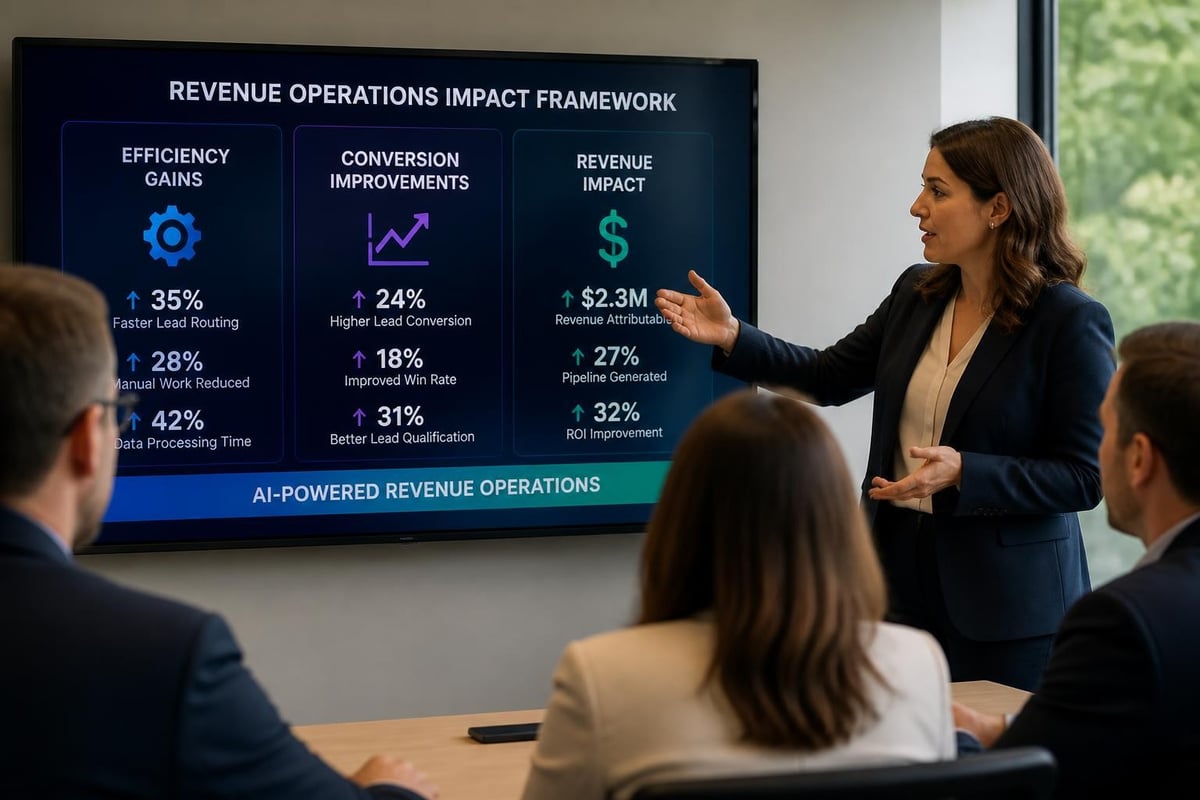
Efficiency Metrics That Matter
The most immediate ai smart benefits typically appear in time savings and resource optimization. These efficiency gains compound over time as systems learn and improve.
Time to first response measures how quickly leads receive initial outreach after entering your system. AI smart routing and automated initial communication can reduce this from hours to minutes, directly impacting conversion rates in industries where speed-to-lead correlates strongly with win probability.
Data entry hours represents the manual work eliminated through intelligent enrichment and automated field population. For sales organizations where reps spend 15-20% of their time on administrative tasks, recovering even half that capacity creates substantial productivity gains.
Lead qualification accuracy compares the percentage of marketing-qualified leads that actually convert to opportunities. As ai smart scoring improves, marketing can adjust their criteria to send only high-probability leads to sales, reducing wasted follow-up effort on contacts unlikely to buy.
Revenue Impact Indicators
Efficiency matters, but revenue impact justifies continued investment in ai smart capabilities. These metrics connect technology performance to business outcomes.
Conversion rate improvements across each pipeline stage, particularly early-funnel conversions where ai smart lead scoring has the most significant impact
Average deal size changes when intelligent product recommendation and configuration tools help sales teams identify expansion opportunities
Sales cycle length reduction as ai smart tools help reps prioritize activities that historically accelerate deals through each stage
Win rate increases when conversation intelligence and competitive analysis provide actionable coaching insights
Customer lifetime value growth driven by ai smart retention predictions that trigger proactive intervention before churn occurs
Research into AI explainability and governance in smart systems emphasizes the importance of understanding not just that AI improves outcomes, but why specific interventions work. This knowledge allows teams to replicate successes and avoid repeating failures.
Overcoming Common AI Smart Implementation Challenges
Even well-planned ai smart deployments encounter obstacles. Anticipating these challenges and preparing mitigation strategies improves success probability.
Data Privacy and Compliance Concerns
AI smart systems process customer data to generate insights and predictions. This creates potential privacy and compliance risks that require careful management.
Data residency requirements in certain jurisdictions mandate that customer information stays within specific geographic boundaries. Organizations operating internationally must verify that their ai smart platforms can enforce these restrictions without degrading functionality.
Consent and transparency obligations under regulations like GDPR require clear communication about how AI uses personal data. This extends beyond privacy policies to include explaining automated decision-making that significantly affects individuals.
Retention and deletion protocols must account for AI training data. When a customer exercises their right to deletion, organizations must remove their data not just from production databases but also from model training sets and archived datasets.
Managing False Positives and Model Drift
No ai smart system achieves perfect accuracy. Models make incorrect predictions, and their performance degrades over time as business conditions change.
Establishing acceptable error rates before deployment sets realistic expectations. If your ai smart lead scoring flags 80% of eventual customers as high-priority but also incorrectly flags 15% of non-buyers, is that acceptable? The answer depends on your sales capacity and cost of pursuing false positives.
Monitoring model performance through regular validation against hold-out datasets reveals when accuracy begins degrading. Most ai smart systems should undergo quarterly performance reviews at minimum, with more frequent checks for high-stakes applications like churn prediction or fraud detection.
Implementing human-in-the-loop workflows for critical decisions ensures that AI recommendations receive expert review before execution. This proves particularly important during the initial deployment phase when teams are still building trust in system outputs.
Future Directions for AI Smart Technology
The ai smart landscape continues evolving rapidly, with emerging capabilities that will reshape business operations over the next few years.
Multimodal AI Integration
Current ai smart systems primarily process text and structured data. Next-generation platforms will seamlessly analyze images, video, audio, and text simultaneously to extract richer insights.
For sales organizations, this means conversation intelligence that doesn't just transcribe calls but analyzes tone, pace, and visual cues from video meetings to provide more nuanced coaching feedback. For marketing teams, it enables content analysis that evaluates not just copy but design, layout, and multimedia elements to predict performance.
Autonomous Agent Networks
Individual ai smart tools automate specific tasks. Emerging agent-based systems coordinate multiple AI capabilities to accomplish complex objectives with minimal human intervention.
Research exploring IoT and AI in smart sustainable systems demonstrates how autonomous agents can collaborate to optimize interconnected processes-principles applicable to revenue operations where marketing, sales, and service workflows must coordinate seamlessly.
Imagine an autonomous revenue agent that monitors pipeline health, identifies deals at risk of stalling, researches the specific challenges causing hesitation, generates personalized content addressing those concerns, and schedules follow-up activities-all without human intervention except final approval.
Federated Learning for Privacy-Preserving AI
Traditional ai smart models require centralizing data for training. Federated learning allows models to train across distributed datasets without moving sensitive information to central locations.
For businesses handling highly sensitive customer data or operating across strict regulatory boundaries, federated approaches enable ai smart capabilities that would otherwise create unacceptable privacy risks. The technology remains emerging but shows significant promise for enterprise applications.
Building AI Smart Capabilities Incrementally
Organizations often fail with ai smart implementations by attempting comprehensive transformations rather than incremental improvements. A phased approach delivers faster value and reduces risk.
Start With High-Impact, Low-Complexity Use Cases
Not all ai smart applications offer equal return on investment or require equivalent implementation effort. Prioritizing quick wins builds momentum and stakeholder confidence.
Automated data enrichment typically delivers immediate value with minimal change management. Teams continue working as before while the system quietly maintains data quality in the background. Success here creates trust for more complex initiatives.
Intelligent email sequencing improves conversion rates without requiring sales process changes. The ai smart system optimizes send times and message selection, but reps still handle relationship development and deal progression as always.
Basic predictive scoring provides better lead prioritization than manual point systems with less setup complexity than conversation intelligence or autonomous agents.
Expand Based on Proven Value and Team Readiness
After initial successes demonstrate ai smart capabilities and teams develop comfort with the technology, organizations can tackle more sophisticated applications.
Conversation intelligence requires higher adoption effort because it changes how sales managers coach and how reps prepare for calls. But teams that have already seen value from simpler ai smart tools show greater willingness to embrace this change.
Predictive pipeline analytics works best when underlying data quality is strong and teams trust AI-generated insights. Organizations that successfully implemented automated enrichment and intelligent scoring have the foundation necessary for this advancement.
Autonomous workflows represent the most complex implementations, requiring robust error handling, escalation protocols, and change management. These should only follow demonstrated success with simpler ai smart applications.
AI Smart Strategy Aligned With Business Objectives
Technology implementations succeed when they solve real business problems rather than pursuing innovation for its own sake. Effective ai smart strategies start with clear objectives.
Mapping AI Capabilities to Revenue Goals
Every business has specific constraints limiting revenue growth. AI smart technology should directly address these bottlenecks.
If pipeline velocity is the constraint, focus ai smart capabilities on identifying and eliminating deal stalls. Predictive analytics that flag at-risk opportunities and suggest interventions directly impact this metric. Understanding pipeline velocity drivers helps identify where AI can deliver maximum impact.
If lead volume limits growth, prioritize ai smart tools that improve conversion efficiency. Better scoring, more effective nurturing, and optimized outreach timing allow teams to extract more revenue from existing lead flow.
If customer retention creates drag, implement ai smart churn prediction and automated intervention workflows that proactively address satisfaction issues before customers leave.
Aligning AI Investments With Team Capabilities
The most sophisticated ai smart platform delivers no value if your team can't use it effectively. Implementation strategies must account for current capabilities and realistic development timelines.
Technical capacity determines whether you can manage complex integrations and custom development or should focus on native platform features. Organizations without dedicated technical resources benefit most from turnkey ai smart solutions requiring minimal configuration.
Data literacy across revenue teams affects how well they can interpret AI insights and act on recommendations. Teams comfortable with analytics and data-driven decision-making adopt ai smart tools faster than those accustomed to intuition-based workflows.
Change tolerance varies significantly across organizations. Some embrace new technology enthusiastically while others resist any process modification. Honest assessment of your culture should inform implementation pace and change management investment.
AI smart technology has evolved from experimental novelty to essential infrastructure for revenue-focused organizations. The businesses seeing the greatest returns approach implementation strategically, focusing on specific bottlenecks rather than comprehensive transformation, and building capabilities incrementally as teams develop proficiency. Whether you're beginning to explore intelligent automation or scaling existing ai smart capabilities, success requires aligning technology investments with clear business objectives and ensuring your team has the support needed for effective adoption. Revio helps businesses implement AI smart solutions within HubSpot through structured implementations that balance technical capability with practical business value, ensuring your CRM becomes a revenue acceleration platform rather than just a database.
Put good ideas to work in your business.
We build practical AI systems around your customers, your team and the work that helps your business grow.